

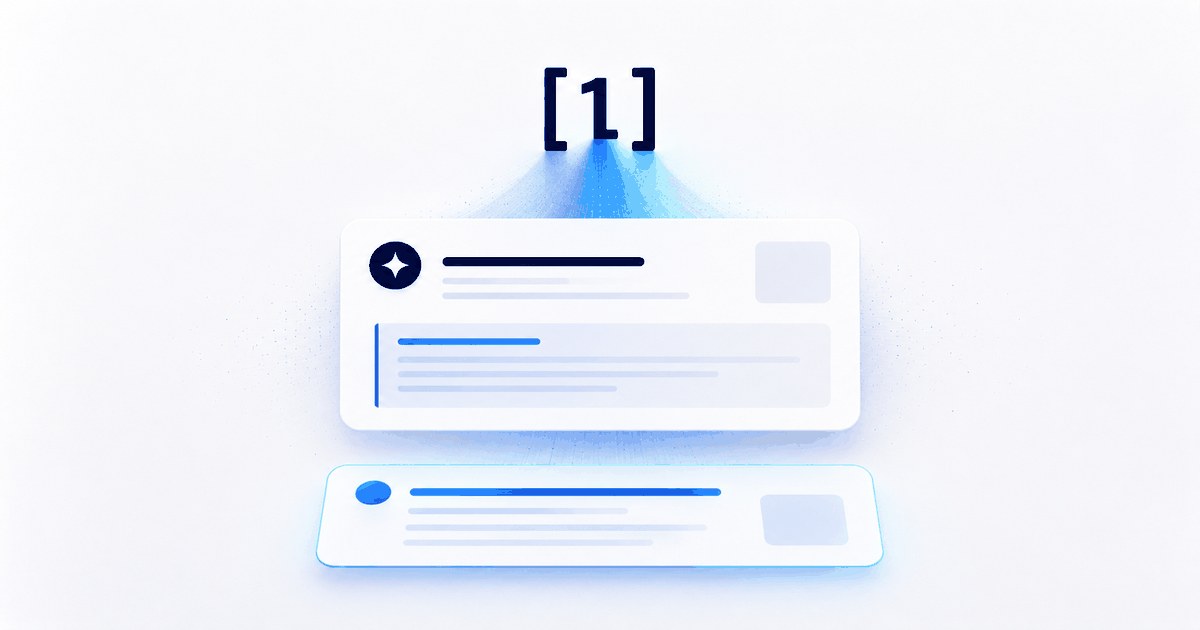
Perplexity can accompany its answers with clickable references. Their number, order and presence vary with the question and mode used. No publisher can force the platform to reference a page.
A serious strategy therefore pursues three measurable goals: make content accessible, publish verifiable information and observe mentions using a stable protocol. ChatGPT is covered separately in our guide to visibility in ChatGPT.
The bots published by Perplexity
The official documentation distinguishes, among others, PerplexityBot, used for the search index, and Perplexity-User, associated with user-triggered requests. These identities let publishers define an access policy in robots.txt.
This documentation does not describe a fixed ranking, a number of results crawled or a formula for selecting citations. Allowing a bot does not guarantee crawling, indexing or inclusion in an answer.
Check technical access
- Access Check pages and the bot policy.
- Information Publish useful, verifiable facts.
- Markup Describe visible content with Schema.org.
- Reputation Develop authentic mentions and references.
- Measurement Document tests and their context.
Start by checking what depends on the website:
- Strategic pages respond correctly and have no unintended
noindexdirective. - The
robots.txtfile reflects an explicit decision for Perplexity’s bots. - The sitemap and internal links allow important pages to be discovered.
- Server logs are checked when a bot’s actual visit needs to be confirmed.
Publish verifiable information
There is no sentence length or word count officially recommended by Perplexity. Clear presentation remains useful for readers and systems that analyse the page:
- Answer the question directly before explaining the nuances.
- Date prices, rules and data that may change.
- Link to the primary source for figures and obligations.
- Distinguish external facts, Kanexio’s experience and editorial opinion.
- Remove superlatives that cannot be demonstrated.
Use Schema.org to describe, not to promise
Organization, Person or Article markup can make already visible information explicit. It must remain consistent with the page. Perplexity’s public documentation does not make it a condition for citation.
The llms.txt file is also a non-standardised community proposal. It can serve as a documentation experiment, but it is not an official Perplexity requirement and guarantees no result.
Build a real reputation
Publish content that provides original information: an explained method, verifiable data, documented examples and clearly stated limitations. External mentions can help readers and search engines discover an organisation, but no Domain Rating threshold or press quota guarantees a citation.
A mention should be earned for its editorial relevance, not to simulate evidence of authority. Directories, partnerships and press relations must remain accurate and transparent.
Measure with a repeatable protocol
Build a small set of questions representative of your business. Repeat it at regular intervals, keeping the wording, date, search mode and displayed references.
For a PEB certification business in Brussels, the set may cover a price, an obligation, a deadline, a municipality and a service comparison. The goal is not to provoke a commercial recommendation, but to check whether published information is discovered and accurately reproduced.
- Record a simple mention, a clickable reference and a measured visit separately.
- Check the accuracy of the context, not just whether the name appears.
- Compare several observations before concluding that something has changed.
- Link visits to conversions only when attribution allows it.
What no one can guarantee
No bot setting, schema or content type can guarantee a citation or a timeframe. Answers can change without any change to your website. An appearance observed today is not an established position.
The value of the work therefore lies in lasting website improvements: better access, more reliable content, visible sources and more rigorous measurement.
Practical guide
Download the complete guide
A checklist for checking access, sources, editorial consistency and mention tracking.
Get the free PDF →To examine your website’s technical and editorial barriers, request an AI visibility audit.